 Language
 English
 Português
 Deutsch
 Français
 русский
 Italiano
 日本語
 عربي
 Español

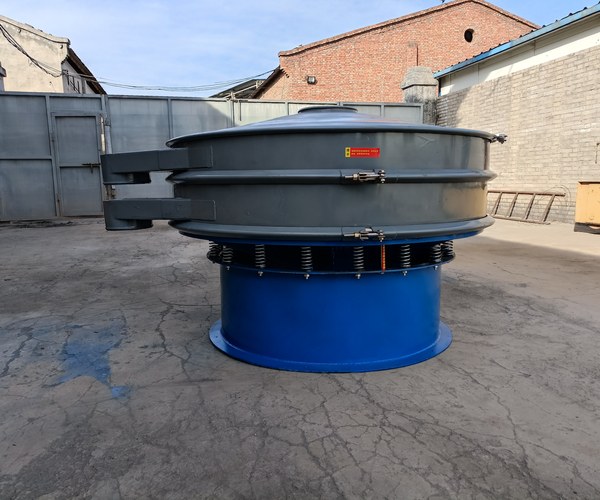
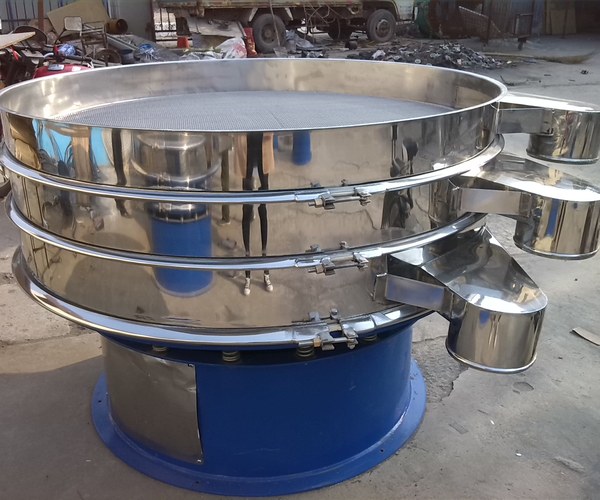
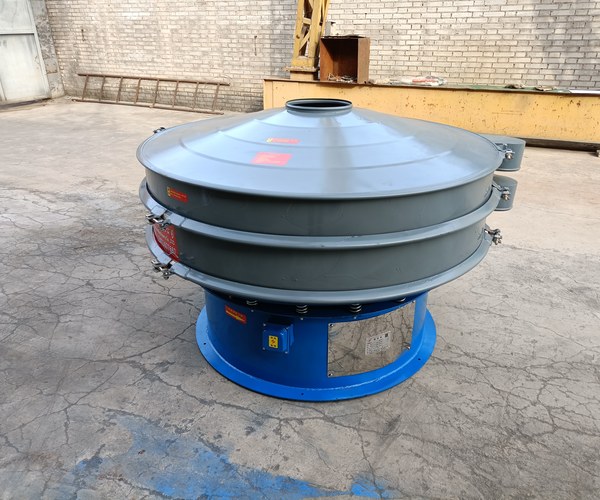
Understanding the working principle of a circular vibrating screen helps operators select the right machine and set it correctly. The machine uses a vertical vibration motor with eccentric weights mounted at both ends of the shaft. When the motor rotates, the weights generate a centrifugal force whose horizontal and vertical components create a three-dimensional motion.
Material fed onto the centre of the top deck spreads outward while moving in a spiral path. Particles smaller than the mesh opening pass through to the next deck; larger particles continue to travel toward the discharge outlet. A multi-deck vibrating screen can therefore divide one feed stream into several size fractions in a single pass.
Two parameters define the motion: amplitude and frequency. Amplitude is controlled by the eccentric weights and determines how far the deck travels; frequency is linked to motor speed and affects how quickly material moves. For difficult materials such as sticky or electrostatic powders, an ultrasonic vibrating screen may be used. In that design, an ultrasonic transducer adds a high-frequency, low-amplitude vibration to the mesh, which reduces blinding and keeps openings clear.
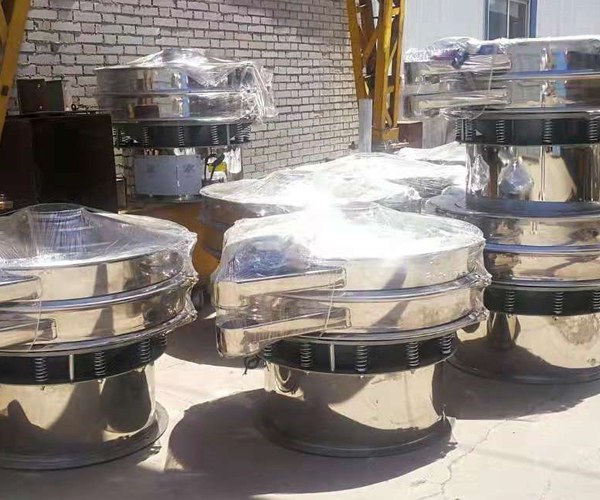
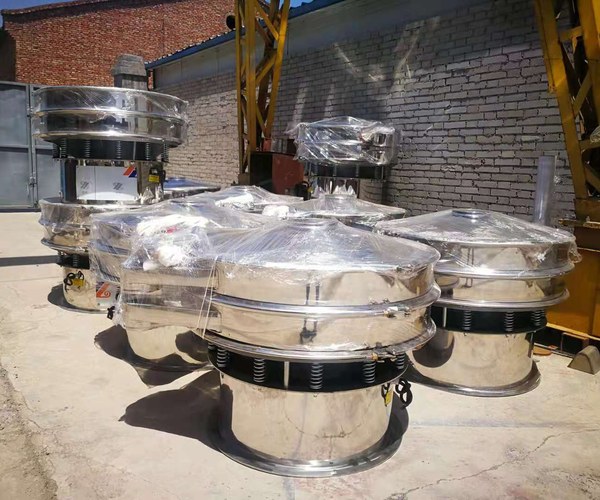
When selecting equipment, match the deck diameter and the number of layers to the required throughput and the number of fractions. A stainless steel vibrating screen is often specified for food and pharmaceutical applications where cleanability and corrosion resistance matter. By understanding how the circular motion interacts with the material, operators can adjust the machine to achieve consistent results rather than relying on trial and error.


